






You notice the subtle shifts first. Missed dinners, the sudden need for privacy, or a flash of anger that feels out of character. As a parent, spouse or friend, your intuition is powerful. If you feel something’s off, you might be noticing some early signs of heroin addiction.
At Swift River, we understand this fear. Heroin addiction is no easy feat, but it is not one you or your loved one has to face alone. Recognizing the signs of heroin addiction is the first step toward getting the help that can save a life. In the peaceful setting of Western Massachusetts, recovery is something we work on together.
What Is Heroin Addiction?
Heroin is a highly addictive opioid drug processed from morphine. It typically appears as a white or brownish powder or a black, sticky substance known as “black tar heroin”. Because it enters the brain rapidly and binds to opioid receptors, it creates a powerful “rush” of pleasure followed by a state of drowsy relaxation.
How Heroin Affects The Brain And Body
Heroin interacts directly with the areas that control vital functions. When someone uses heroin, the drug floods the brain’s reward system with dopamine, teaching the brain to prioritize the drug above all else.
Over time, this repeated flooding changes the brain, leading to long-term imbalances in neuronal and hormonal systems. The body also develops a tolerance. The individual needs increasingly larger doses to feel “normal”.
From Use To Dependence: Understanding The Progression
The journey from early use to full-blown addiction can happen fast. What may start as social use often spirals into daily use. As dependence sets in, the individual is no longer using heroin to get high, but to avoid the agonizing symptoms of withdrawal.
This is when the addiction becomes a chronic brain disorder. A person continues to use despite the devastating impact on their health, relationships, and career.
Physical Signs Of Heroin Use
Physical changes are often the most visible indicators that someone is struggling with heroin. These signs may vary depending on how the drug is consumed—whether it is snorted, smoked, or injected.
Immediate Physical Indicators
When someone is under the influence of heroin, you may notice several immediate behaviors and physical shifts:
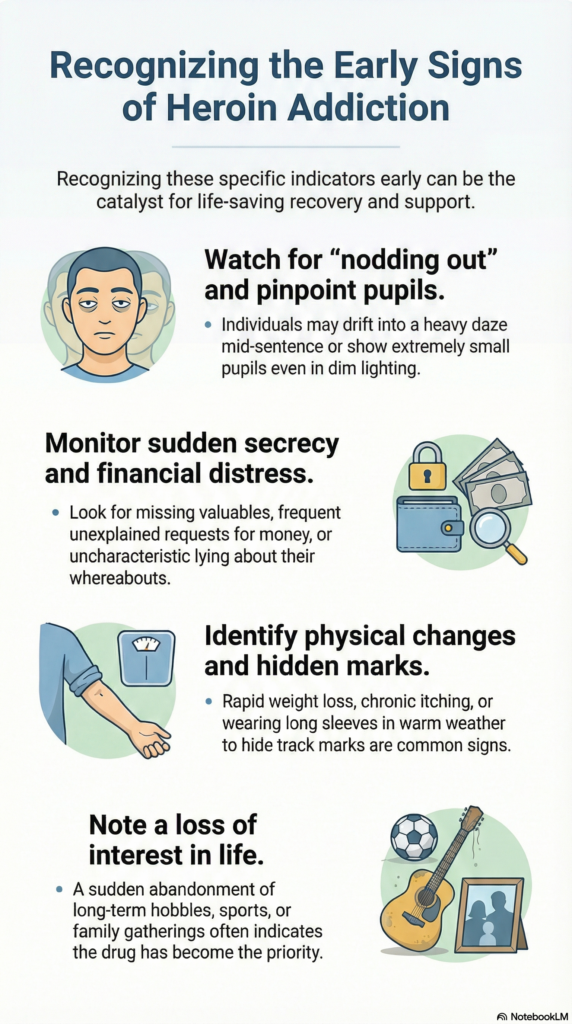
- “Nodding Out”: The person may suddenly drift into sleep or a heavy daze, sometimes mid-sentence, then snap back into hyper-alertness.
- Constricted Pupils: Also known as “pinpoint pupils,” the black center of the eye becomes very small, even in low light.
- Slowed Breathing: Heroin slows down the respiratory system, which can be particularly dangerous during an overdose.
- Itching and Flushed Skin: Many users experience severe itching or a warm flushing of the skin shortly after use.
- Track Marks: If they are injecting the drug, you might see scabs, sores, or bruising along the veins in their arms or legs. They may wear long sleeves year-round to hide these marks.
Long-Term Health Effects
Prolonged heroin use takes a severe toll on the body’s internal systems:
- Weight Loss: Chronic users often lose interest in food, leading to rapid and noticeable weight loss.
- Weakened Immune System: They may seem to be sick constantly, with a frequent runny nose or persistent infections.
- Organ Damage: Long-term use is associated with damage to the liver, kidneys, and lungs.
- Infectious Diseases: For those who inject, there is a significantly higher risk of contracting HIV, hepatitis C, or bacterial infections of the heart and bloodstream.
Behavioral And Psychological Signs
While the physical signs are alarming, the behavioral shifts often cause the most pain for families. You may feel as though the person you love has been replaced by someone you don’t recognize.
Changes In Daily Life And Relationships
As heroin becomes the center of their world, other responsibilities fall away:
- Secrecy and Deception: They may begin to lie about where they are going or who they are with.
- Financial Trouble: You might notice valuables missing from the home or frequent, unexplained requests for money.
- Loss of Interest: Activities they once loved—hobbies, sports, or family gatherings—are often abandoned.
- Declining Performance: Their performance at work or school may suffer, leading to frequent absences or job loss.
Emotional And Mental Health Warning Signs
The psychological impact of heroin is profound and can manifest in several ways:
- Mood Swings: The person may alternate between extreme euphoria and deep depression or irritability.
- Anxiety and Paranoia: Persistent feelings of nervousness or suspiciousness are common.
- Poor Judgment: They may engage in risky behaviors, such as driving while under the influence or stealing, that they normally wouldn’t consider.
If you are recognizing these signs in someone you love, a confidential assessment can help you understand next steps. Our team at Swift River is available 24/7 to answer your questions and provide the support your family needs.
What Heroin Withdrawal Looks Like
One of the greatest hurdles to quitting is the fear of withdrawal. Heroin withdrawal is notoriously painful, which is why many individuals continue to use even when they desperately want to stop.
Early Withdrawal Symptoms
Withdrawal symptoms usually begin between 6 and 12 hours after the last dose. These early symptoms often feel like a severe case of the flu:
- Intense Cravings: A powerful, overwhelming urge to use the drug again.
- Muscle and Bone Pain: Deep, aching pains in the limbs and back.
- Gastrointestinal Distress: Nausea, vomiting, abdominal cramping, and diarrhea.
- Restlessness and Insomnia: An inability to sit still or find a comfortable sleeping position.
The Timeline Of Detox
The detox process generally follows a predictable timeline, though it varies based on the duration and intensity of the addiction:
- Days 1–2: Symptoms typically peak during the first 48 to 72 hours. This is often the most physically and emotionally challenging period.
- Days 3–5: Physical symptoms slowly begin to subside, though fatigue and mood swings may persist.
- After Day 7: While the acute physical withdrawal is largely over, psychological symptoms like anxiety and depression can last for weeks or even months.
Treatment Options For Heroin Addiction In Massachusetts
Recovery requires a comprehensive approach that addresses both the physical and psychological components of addiction. In Massachusetts, there are several high-quality options for those seeking help.
Medical Detox: The First Step To Safety
Because heroin withdrawal is so distressing, a medically supervised detox is the safest and most effective way to start. In a clinical setting like Swift River, medical professionals monitor the patient 24/7, providing medications to ease withdrawal symptoms and ensure the individual remains stable. This professional support significantly reduces the risk of relapse during the most vulnerable early days of recovery.
Residential Treatment And Dual Diagnosis Care
Following detox, residential treatment provides the structure and support needed to build a foundation for long-term sobriety. At our campus in the Berkshires, we offer a “dual diagnosis” approach, which means we treat the addiction alongside any co-occurring mental health issues, such as depression or PTSD. By addressing the underlying causes of use, we give our patients the tools they need to maintain their recovery once they return home.
Medication-Assisted Treatment (MAT) And Long-Term Recovery
Medication-Assisted Treatment (MAT) is an evidence-based practice that combines behavioral therapy with FDA-approved medications like buprenorphine or naltrexone. These medications help to normalize brain chemistry, block the euphoric effects of opioids, and relieve physiological cravings. MAT is not “replacing one drug for another”; rather, it is a clinical tool that helps stabilize the brain so the individual can focus on their recovery work.
How To Help Someone With Heroin Addiction
Talking to a loved one about their heroin use is incredibly difficult, but it is a conversation that must happen. You do not have to be an expert to show you care.
- Choose the Right Time: Approach them when they are least likely to be under the influence and in a quiet, private space.
- Lead with Love: Use “I” statements to express your concerns without being accusatory. For example, “I am worried because I’ve noticed you aren’t yourself lately,” rather than “You are acting like an addict.”
- Listen Without Judgment: Allow them to share their feelings, even if what they say is difficult to hear.
- Offer Specific Help: Instead of asking “How can I help?”, offer tangible support, such as researching treatment centers or checking their insurance coverage.
- Set Boundaries: It is important to avoid “enabling” behaviors, such as giving them money or making excuses for their behavior. Setting healthy boundaries is an act of love for both of you.
Our Location: Finding Peace In The Berkshires
Swift River is located at 151 South Street, Cummington, Massachusetts 01026. While we serve families from all over New England, including Boston and Worcester, our location in the peaceful Berkshire Mountains is a vital part of our philosophy.
Traveling away from the “people, places, and things” associated with addiction provides a much-needed reset. Our 500-acre wilderness campus allows for nature-based healing and adventure-based therapies that simply aren’t possible in an urban setting. We specialize in helping families from across the state navigate the logistics of getting to our facility, ensuring that the distance is a bridge to recovery rather than a barrier.
Frequently Asked Questions
1. How long does heroin stay in your system? Heroin has a very short half-life and is usually detectable in the blood for only a few hours. However, its metabolites can be found in urine for 2 to 7 days, and in hair for up to 90 days.
2. Can you die from heroin withdrawal? While heroin withdrawal is rarely directly fatal for healthy individuals, it is extremely taxing on the body. Complications such as severe dehydration from vomiting or underlying health issues can make it dangerous, which is why medical supervision is always recommended.
3. What happens during medical detox for heroin? During medical detox, clinicians monitor your vitals 24/7. They may administer medications to manage pain, nausea, and anxiety, ensuring you are as comfortable as possible as the drug leaves your system.
4. Does insurance cover heroin addiction treatment in Massachusetts? Yes, most private insurance plans and state-funded programs like MassHealth provide coverage for addiction treatment. Swift River accepts most major insurance providers; our admissions team can help you verify your coverage instantly.
Heroin Addiction Stops Here
Heroin addiction is a devastating disease, but it does not have the final word. At Swift River, we have seen countless sons, daughters, and spouses reclaim their lives and rebuild their families. Your loved one deserves compassionate, evidence-based treatment in a setting that fosters real change.
Call Swift River today at 413-570-9698 to speak with an admissions specialist about medical detox, residential treatment, and our full continuum of care in the peaceful Berkshires. One call starts the journey to the life your family deserves.