







Approaching a loved one about their addiction is a heavy burden. Knowing how to tell someone they need rehab requires a delicate yet firm approach. This guide provides a practical framework for families in Massachusetts and beyond to navigate this high-stakes conversation with compassion and clinical insight.
To tell someone they need rehab effectively, you must approach the conversation during a calm, sober moment and lead with specific, love-based observations rather than labels or accusations. By focusing on your relationship and the specific behaviors you have witnessed, you can help your loved one see the need for professional treatment in the Berkshires or their local community.
Key Takeaways
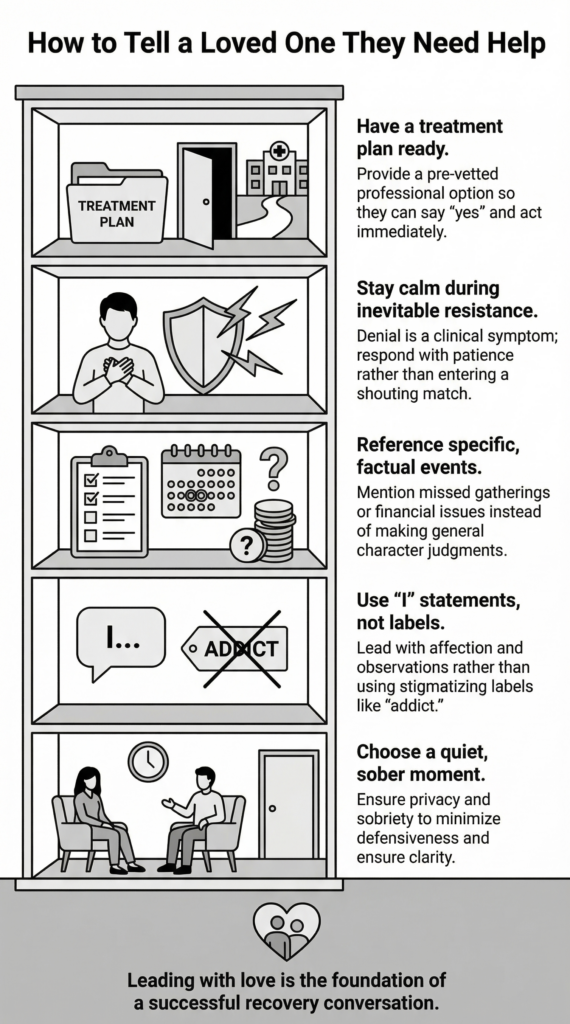
- Lead with Love: Avoid ultimatums and “addict” labels; use “I” statements to express your concern and affection.
- Timing Is Vital: Choose a quiet, private setting when your loved one is sober and least likely to be defensive.
- Be Specific: Reference actual events, such as missed family gatherings or financial issues, rather than making general judgments.
- Expect Resistance: Denial is a common symptom of substance use disorder; stay calm if they initially refuse help.
- Offer a Path: Have a specific treatment option, such as a program in Western Massachusetts, ready to discuss if they say yes.
Why This Conversation Feels Difficult… And Why It Matters
For many parents and spouses, the decision to speak up feels like walking through a minefield. You may worry that addressing the problem will push your loved one further away or trigger a crisis. This hesitation is natural, especially when you are already emotionally exhausted from the cycle of addiction.
The Fear Of Saying The Wrong Thing
Many families stay silent because they are terrified of a “bad” reaction. You might worry that your child will stop calling or that your spouse will seek a divorce if you mention rehab. This fear of conflict often keeps families trapped in a state of enabling, where the addiction is allowed to continue because the alternative seems too painful.
Why Waiting Often Makes It Harder
Addiction is a progressive disease that rarely resolves on its own. Waiting for a “rock bottom” can be dangerous, as that point often involves legal trouble, overdose, or severe health complications. Intervening early—even when it feels uncomfortable—can prevent the most devastating consequences of long-term substance use.
If you are not sure what level of care your loved one needs, our team can help you think it through confidently, with no pressure.
Before You Talk: How To Prepare Yourself
A successful conversation begins long before you sit down with your loved one. Preparation helps you stay grounded when emotions run high and ensures your message remains clear and consistent.
Get Clear On What You Want To Communicate
Write down the specific points you want to make. Focus on how their substance use has affected your relationship and their own well-being. Avoid general statements like “you always drink too much.” Instead, focus on facts: “I felt scared when you were unable to pick up the kids from school last Friday”.
Choose The Right Time And Setting
Privacy and sobriety are the two most important factors for this discussion. Avoid bringing up rehab during an active argument or when your loved one is currently under the influence. A quiet morning at home is often better than a public place where they might feel embarrassed or cornered.
Consider Looping In Other Trusted People
Sometimes a one-on-one talk is best, but in other cases, having a small group of trusted family members or friends can show a united front of support. Ensure that everyone involved is committed to a non-judgmental, loving approach.
How To Tell Someone They Need Rehab Without Pushing Them Away
The goal of this conversation is to open a door, not to build a wall. By using specific communication techniques, you can lower their defenses and make it easier for them to hear your concerns.
1. Lead With Love, Not Ultimatums
Start by reminding them how much they mean to you. Phrases like “I love you and I want our family to be whole again” set a supportive tone. Ultimatums often trigger a fight-or-flight response, making the person less likely to consider treatment.
2. Use Specific Observations, Not Labels
Labels like “addict” or “alcoholic” carry heavy stigma and often cause people to shut down. Instead, describe behaviors you have seen and the impact they had. This keeps the focus on the problem (the substance use) rather than the person’s character.
3. Listen As Much As You Speak
Your loved one needs to feel heard. If they express fear, shame, or frustration, acknowledge those feelings. Listening does not mean you agree with their excuses, but it shows that you still respect them as a person.
4. Be Ready For Denial Or Anger
Denial is a clinical symptom of addiction. If they react with anger or claim they don’t have a problem, try to stay calm. Do not get drawn into a shouting match. Simply restate your love and your concern, and let them know the offer of help remains open.
What To Do If They Say No
It is common for the first conversation about rehab to end in a “no.” While this is disappointing, it does not mean the conversation was a failure. You have planted a seed and clearly stated your position.
Hold The Boundary Without Closing The Door
If they refuse help, you may need to set clear boundaries to protect your own well-being. This might mean no longer providing financial support or refusing to lie to other family members for them. Make it clear that while you love them, you will no longer support their addiction.
How To Help Someone Who Doesn’t Think They Have A Problem
For those in deep denial, it can be helpful to provide literature from organizations like the National Institute on Drug Abuse (NIDA) or the Substance Abuse and Mental Health Services Administration (SAMHSA). Sometimes, hearing the clinical facts from a third party can help break through the resistance.
When A Formal Intervention Makes Sense
If one-on-one conversations have failed and the situation is becoming dangerous, it may be time to consult a professional interventionist. In Massachusetts, an interventionist can help organize a structured meeting that focuses on safety and immediate transition into a treatment program.
When they are ready to say yes, Swift River is ready to help. One call connects your family to our admissions team.
Finding The Right Rehab Program In Western Massachusetts
Once your loved one agrees to help, you must act quickly. Having a pre-vetted program ready can prevent them from changing their mind during the logistics phase.
What To Look For In A Treatment Center
A quality program should offer a full continuum of care, from medical detox to aftercare planning. Look for facilities that are accredited by The Joint Commission and offer evidence-based therapies like CBT and DBT. It is also important to choose a setting that feels safe and comfortable, such as a residential center in the peaceful Berkshires.
How Swift River Supports Families Through This Process
Swift River, located in Cummington, MA, understands that addiction is a family disease. We offer a 200-acre wilderness campus where nature is a central part of the healing process. Our team specializes in dual diagnosis care, treating co-occurring disorders like depression and anxiety alongside addiction.
We prioritize family involvement and offer resources to help you heal while your loved one is in treatment. From our pet-friendly accommodations to our specialized Veterans Support Program, we strive to make recovery feel like a return to oneself, not a punishment.
Our Location: A Sanctuary In The Berkshires
Swift River is located at 151 South Street, Cummington, MA 01026. While many families in Boston or Worcester look for local outpatient care, there is significant clinical value in traveling to our secluded campus in Western Massachusetts.
The distance provides a physical and psychological barrier to the “people, places, and things” that trigger use. Our setting in the Berkshire Mountains offers room to breathe and space to become someone new. We provide seamless travel coordination for families across New England to ensure your loved one arrives safely at our doors.
Frequently Asked Questions
1. What do you say to someone who refuses to go to rehab? Directly express your love and stay firm on your boundaries. You might say, “I respect your choice, but I can no longer pay your rent while you are using. If you change your mind about the program in the Berkshires, I am ready to help you pack”.
2. How do you tell a family member they have a drinking problem without making them defensive? Avoid using “you” statements like “You drink too much.” Instead, use “I” statements: “I feel worried about your health when I see you drinking every night”.
3. Should I stage a formal intervention or talk to them privately first? Always try a private, loving conversation first. A formal intervention is a significant step and is usually most effective when guided by a professional.
4. What if my loved one agrees to go to rehab and then changes their mind? This is common. Stay calm and remind them of why they agreed in the first place. Avoid arguing; instead, focus on the immediate next step, such as getting in the car or calling the admissions office.
5. How do I find a rehab program that’s right for my family member? Look for a center that specializes in their specific needs, such as dual diagnosis or veteran-specific care. Verify their insurance and check for Joint Commission accreditation.
6. Can family members be involved in the treatment process? Yes, most high-quality residential programs, including Swift River, offer family therapy sessions and regular updates to help the entire family system recover.
7. What should I do to take care of myself while they are in treatment? Consider joining a support group like Al-Anon or Learn to Cope, a Massachusetts-based organization for families. Focus on your own health and hobbies.
Take The First Step Toward Recovery
You have already taken the hardest step by searching for a way to help. Addiction stops here, and a brighter future is possible for your family. You do not have to carry this burden alone.
Call Swift River today to speak with our compassionate admissions team about our full continuum of care, including medical detox and residential rehab. We accept most major insurance plans, including Blue Cross Blue Shield and Cigna.
Contact Swift River at 413-570-9698 and let us walk alongside you.
Safety and Support Resources
- 988 Suicide & Crisis Lifeline: Call or text 988 or visit 988lifeline.org.
- SAMHSA National Helpline: 1-800-662-HELP (4357)
- Crisis Text Line: Text HOME to 741741
- In a medical emergency, call 911 immediately.