



Choosing between Suboxone and methadone is a significant decision. One that depends on a person’s health history, lifestyle, and recovery goals. Both medications are life-saving tools designed to stabilize the brain and allow individuals to rediscover hope.
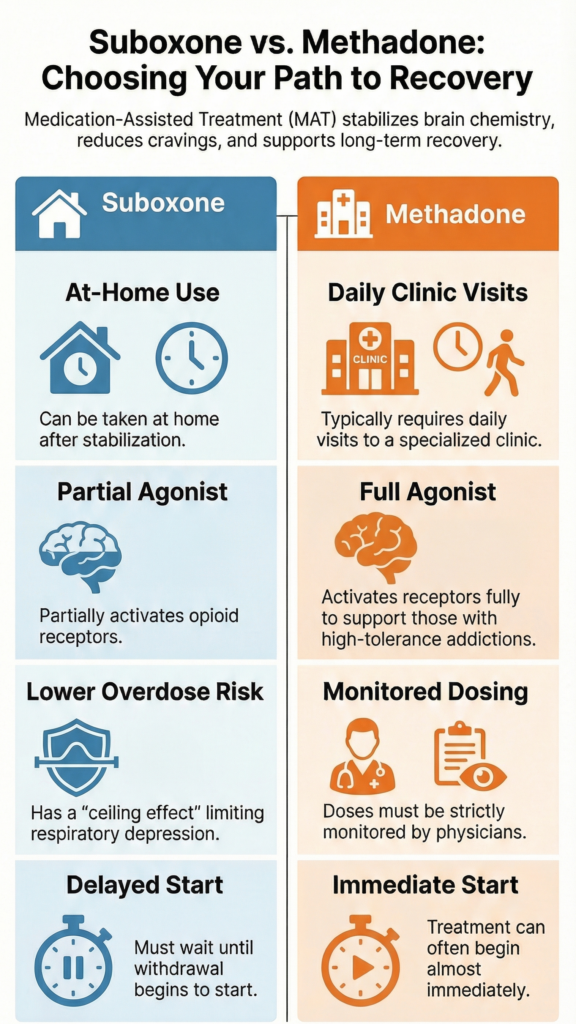
The primary difference between Suboxone and methadone is that Suboxone can be prescribed for at-home use, while methadone requires daily visits to a specialized clinic. Both medications are highly effective at reducing cravings and preventing withdrawal symptoms, making them cornerstones of modern addiction treatment.
Key Takeaways
- Suboxone (buprenorphine/naloxone) offers more flexibility and can be taken at home once a patient is stable.
- Methadone is a long-acting full agonist often recommended for those with high-tolerance addictions or chronic relapse history.
- Safety: Suboxone has a “ceiling effect” that reduces the risk of respiratory depression compared to methadone.
- Clinical Setting: Methadone is typically administered through a highly structured Opioid Treatment Program (OTP).
- Recovery Goals: Both are evidence-based components of Medication-Assisted Treatment (MAT) and are not considered “trading one drug for another”.
What Is Medication-Assisted Treatment (MAT)?
Medication-Assisted Treatment is the use of FDA-approved medications, in combination with counseling and behavioral therapies, to provide a “whole-patient” approach to the treatment of substance use disorders. It is a safe and comfortable way to manage the physical aspects of addiction so that the person can focus on the emotional work of recovery.
How MAT Works For Opioid Addiction
Opioid addiction changes the way the brain’s reward system functions. MAT medications work by binding to the same opioid receptors in the brain that heroin or prescription painkillers do, but without producing a debilitating high. This stabilization reduces intense cravings and blocks the painful symptoms of withdrawal, which are the primary drivers of relapse.
Breaking The Stigma: MAT Is Evidence-Based Treatment
There is a persistent but false idea that using medication for recovery is simply substituting one addiction for another. However, organizations like SAMHSA and the American Society of Addiction Medicine (ASAM) recognize MAT as the gold standard for opioid use disorder treatment. When used as prescribed, these medications do not impair a person’s functioning; instead, they allow them to return to work, drive safely, and be present for their families.
Suboxone: How It Works And Who It Helps
Suboxone is a combination medication containing buprenorphine and naloxone. It is widely used in Massachusetts because it provides a balance of efficacy and accessibility for those who are ready to transition into a more independent lifestyle.
What Makes Suboxone Different
Buprenorphine is a partial opioid agonist. This means it activates the opioid receptors in the brain but to a much lesser degree than full agonists like heroin or methadone. The naloxone component is added as a safety measure; it remains inactive if the medication is taken as directed but triggers withdrawal symptoms if the medication is crushed and injected, helping to prevent misuse.
Benefits And Considerations
- Ceiling Effect: Suboxone has a limit on how much it can affect the respiratory system, which significantly lowers the risk of accidental overdose.
- Convenience: After an initial stabilization period, patients can often receive a prescription for Suboxone that they can fill at a local pharmacy in Western Massachusetts and take at home.
- Precipitated Withdrawal: One major consideration is that a person must be in a certain stage of withdrawal before starting Suboxone, or the medication could cause sudden, intense withdrawal symptoms.
Methadone: How It Works And Who It Helps
Methadone has been used in addiction treatment for decades and remains one of the most studied and effective MAT options available. It is often the preferred choice for individuals who have struggled with very high levels of opioid use.
What Makes Methadone Different
Unlike Suboxone, methadone is a full opioid agonist. It activates the brain’s receptors more fully, which can be more effective at suppressing cravings for someone with a severe, long-term addiction. It is long-acting, meaning one dose can prevent withdrawal and cravings for 24 to 36 hours.
Benefits And Considerations
- High Tolerance: Methadone is often more effective than buprenorphine for patients who do not find relief from partial agonists.
- Structure: Most methadone programs require daily visits to a clinic. For some, this daily routine and face-to-face contact with medical staff provide the accountability needed to stay on track.
- Dosing Safety: Because it is a full agonist, doses must be carefully monitored by a physician to prevent respiratory depression or interactions with other medications.
Suboxone vs Methadone: Key Differences
When comparing Suboxone vs methadone, it is helpful to look at how each will affect your daily life and your long-term recovery journey.
Comparison Of MAT Options
| Feature | Suboxone (Buprenorphine) | Methadone |
| Drug Class | Partial Opioid Agonist | Full Opioid Agonist |
| Administration | Taken at home (after stabilization) | Daily clinic visits (usually) |
| Overdose Risk | Lower (Ceiling Effect) | Higher (Full Agonist) |
| Withdrawal | Must wait 12–24+ hours to start | Can start almost immediately |
| Stigma | Generally lower | Often higher due to clinic model |
Accessibility and Convenience
In metro areas like Springfield or smaller communities in the Berkshires, finding a methadone clinic may require daily travel, which can be difficult for those without reliable transportation. Suboxone is often more accessible for professionals or students because it can be integrated into a standard primary care or outpatient routine.
Effectiveness and Safety Profile
Both medications are highly effective at keeping people in treatment and reducing illicit drug use. However, Suboxone is generally considered safer for people who may have other health complications or who are at a lower risk of relapse. Methadone is often the “heavy lifter” used when other treatments have not been successful.
Cost and Insurance Coverage
In Massachusetts, both medications are widely covered by major insurance providers, including Blue Cross Blue Shield, Cigna, and Harvard Pilgrim. Medicaid (MassHealth) also typically covers MAT services at specialized facilities.
Choosing between Suboxone and methadone is a decision you’ll make with your treatment team. At Swift River, our medical staff can help you understand which medication fits your recovery goals. Call us today for a confidential assessment.
Which Medication Is Right For You?
There is no single “better” medication; there is only the medication that works best for your specific situation. Your treatment team will conduct a thorough medical and psychological evaluation to help you decide.
Factors Your Treatment Team Will Consider
- The Severity of Addiction: Those with a longer history of heavy use may benefit more from methadone.
- Past Treatment Experience: If you have tried Suboxone before and relapsed, a different approach or a higher level of care may be necessary.
- Home Environment: If your home life is unstable, the daily structure of a methadone clinic might be a protective factor.
- Medical History: Certain heart conditions or liver issues might make one medication safer for you than the other.
Finding MAT Programs In Western Massachusetts
Swift River is a private addiction treatment center located on over 200 acres of Massachusetts wilderness in the Berkshires. We believe that nature is a healing force, and our setting provides the room you need to become someone new.
What To Expect From Swift River’s MAT Approach
We offer a full continuum of care, including medical detox, residential treatment, and medication-assisted treatment. We are not a hospital or a punishment; we are a place to heal. Our dual diagnosis specialty ensures that we address the addiction while also treating co-occurring disorders like depression, anxiety, or PTSD.
We are proud to be Joint Commission accredited and SAMHSA certified, using industry-leading detox protocols to ensure your safety and comfort. Whether you are a worried parent looking for your son or a veteran seeking our specialized Veterans Support Program, we treat you as an individual with your own story.
Our Location: The Power Of The Berkshires
Swift River is located at 151 South Street, Cummington, MA 01026. While some people look for a hospital in the middle of a city, many find that traveling to our secluded 200-acre campus in Western Massachusetts provides the distance needed to break the cycle of addiction. We offer seamless travel coordination for families coming from Boston, Worcester, or out of state to ensure your transition into care is as smooth as possible.
Frequently Asked Questions
1. Can I switch from methadone to Suboxone (or vice versa)? Yes, it is possible to switch medications under medical supervision, although transitioning from methadone to Suboxone requires a careful tapering process to avoid precipitated withdrawal.
2. How long will I need to take Suboxone or methadone? There is no set timeline for MAT; some people take it for a few months during early recovery, while others remain on the medication for years to maintain stability.
3. Does insurance cover medication-assisted treatment? Most major insurance plans, including Blue Cross Blue Shield, Cigna, and VA benefits, cover MAT as part of a comprehensive treatment program.
4. Is MAT just replacing one addiction with another? No, MAT is a medical treatment that stabilizes brain chemistry; unlike addiction, it does not cause the compulsive, harmful behaviors associated with drug use.
5. Can I work and drive while taking Suboxone or methadone? Once you are on a stable dose and your body has adjusted, you can safely perform daily tasks like working and driving.
6. Do I have to go to a clinic every day for MAT? Methadone usually requires daily clinic visits initially, whereas Suboxone can often be prescribed for use at home after you have been stabilized.
Your Brighter Future Starts Here
Swift River offers both Suboxone and methadone as part of our comprehensive MAT program in the Berkshires. We believe that comfort matters and that you can have clinical rigor in a beautiful, pet-friendly environment.
We accept most major insurance including Blue Cross Blue Shield and Cigna. One call can help you understand your options and help you live out your best future.
Call Swift River today at 413-570-9698 to speak with our compassionate admissions team.
Safety and Crisis Resources
If you are in immediate danger or experiencing a medical emergency, please call 911.
- SAMHSA National Helpline: 1-800-662-HELP (4357)
- National Suicide Prevention Lifeline: 988
- Crisis Text Line: Text HOME to 741741